Dhurandhar The Revenge, directed by Aditya Dhar, attempts to position itself as a hard-hitting political action drama but ultimately becomes a film weighed down by its own ideological rigidity and narrative imbalance. Marketed as an intense sequel that explores themes of identity, conflict, and national loyalty, the film instead finds itself trapped in a narrow emotional spectrum where characters speak almost exclusively in the language of anger, hostility, and ideological absolutism. What could have been a layered exploration of human conflict and transformation instead turns into a one-dimensional portrayal of extremes, where nuance is sacrificed for spectacle and complexity is replaced by blunt messaging.
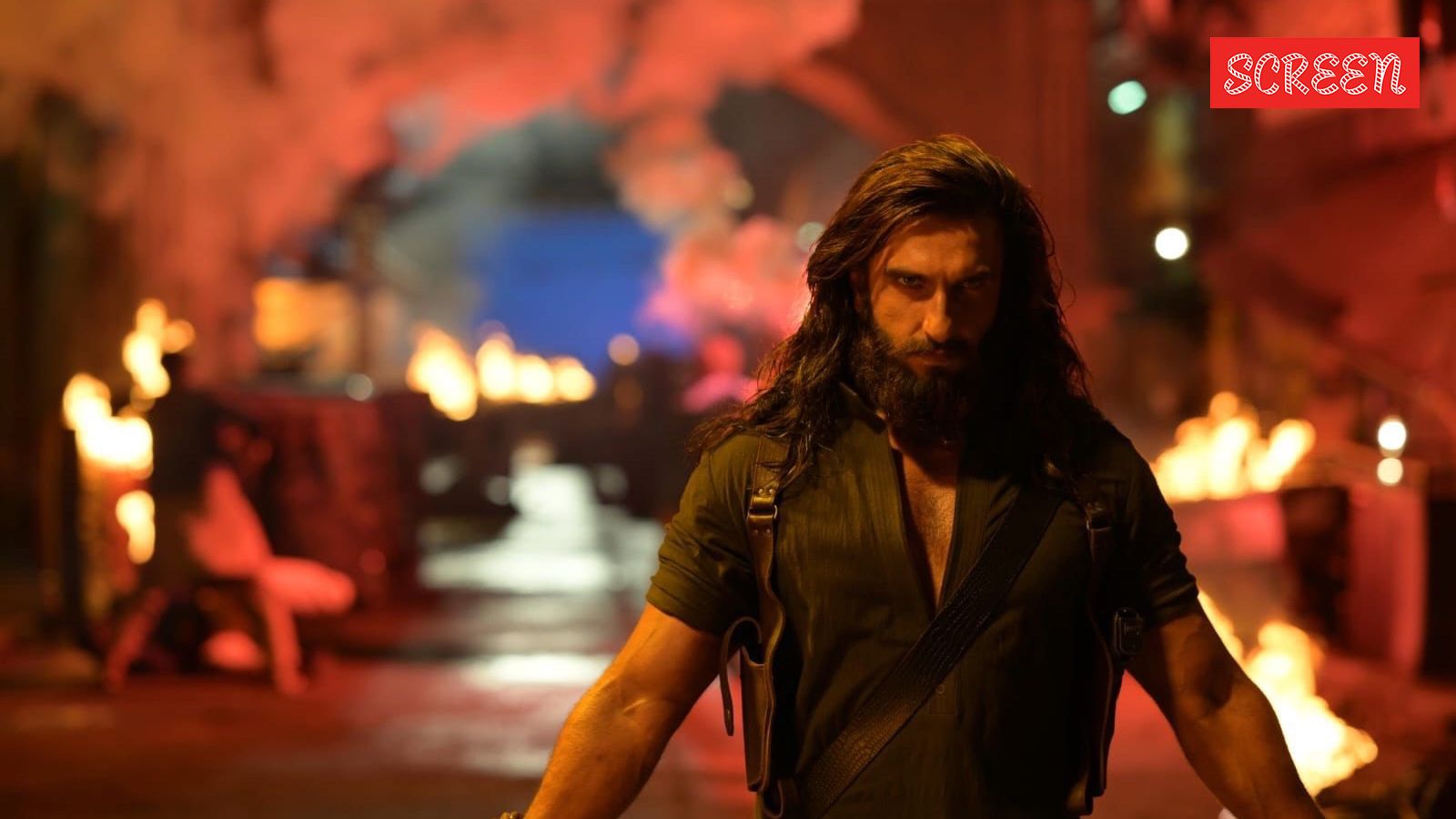
At the center of the film is Ranveer Singh, who plays Jaskirat Singh Rangi, a character caught between past trauma and present obligations. In one of the film’s most telling moments, positioned just after the interval, Rangi stands amid the remnants of his former life, symbolizing a fractured identity and unresolved emotional conflict. Yet, even in this moment of introspection, the narrative quickly pulls him away from self-reflection and thrusts him into the role of Hamza, forcing him to make decisions that define not only his personal journey but also the broader ideological framework of the film. This transition, while potentially rich in psychological depth, is handled with a sense of urgency that leaves little room for emotional exploration, reducing a complex transformation into a plot-driven necessity.
Parallel to Rangi’s arc is the story of the antagonist, Major Iqbal, portrayed by Arjun Rampal. His character offers glimpses of what the film could have achieved had it embraced a more balanced narrative approach. In a scene that precedes Rangi’s transformation, Major Iqbal is shown grappling with dual failures—one as a son seeking validation from a distant and unyielding father, and the other as a commander burdened by the expectations of a nation that demands unwavering certainty. This duality introduces the possibility of a more nuanced antagonist, one who is shaped by personal vulnerabilities as much as ideological convictions. However, much like the protagonist’s journey, this potential is only partially realized, as the film ultimately prioritizes external conflict over internal struggle.
The central theme of Dhurandhar The Revenge revolves around identity and transformation, but its execution often leans toward simplification rather than exploration. Characters are defined more by their roles within the conflict than by their individual motivations, resulting in a narrative that feels constrained by its own framework. Dialogue is frequently heavy-handed, reinforcing the film’s central themes without allowing them to emerge organically. This approach not only limits character development but also diminishes the impact of key moments that could have resonated more deeply with audiences.
Visually, the film maintains a high standard, with carefully crafted action sequences and a cinematic style that reflects its ambitious scope. The use of lighting, set design, and camera movement contributes to the film’s overall intensity, creating an atmosphere that aligns with its thematic focus. However, these technical strengths are often overshadowed by the narrative’s lack of balance, as the emphasis on spectacle sometimes comes at the expense of storytelling. The film’s pacing further complicates this issue, with moments of potential depth quickly giving way to action-driven sequences that prioritize momentum over meaning.
One of the most significant challenges faced by the film is its handling of ideological themes. By presenting characters who operate within rigid belief systems, the narrative limits its ability to engage with the complexities of conflict and identity. Instead of offering multiple perspectives, the film often reinforces a singular viewpoint, which can feel restrictive and, at times, reductive. This approach not only affects character dynamics but also impacts the overall narrative, as the lack of diversity in thought and emotion reduces the story’s ability to evolve organically.
Despite these shortcomings, there are moments within Dhurandhar The Revenge that hint at a more compelling film beneath the surface. Scenes that focus on personal conflict, particularly those involving Rangi and Major Iqbal, reveal a narrative that is capable of exploring deeper emotional and psychological themes. These moments, though limited, provide a glimpse of what the film might have achieved with a more measured and introspective approach. They serve as reminders that the story’s core ideas are not inherently flawed but rather constrained by their execution.
The performances of the lead actors also contribute to these moments of depth. Ranveer Singh brings a certain intensity to his role, capturing the internal struggle of a character caught between conflicting identities. Arjun Rampal, on the other hand, adds a layer of gravitas to his portrayal of Major Iqbal, embodying the character’s sense of duty and personal conflict. However, both performances are ultimately shaped by the limitations of the script, which often prioritizes thematic consistency over character development.
In conclusion, Dhurandhar The Revenge is a film that aspires to explore complex themes of identity, conflict, and transformation but falls short due to its reliance on a narrow emotional and ideological framework. While it succeeds in creating a visually engaging and action-packed experience, its narrative struggles to balance spectacle with substance. The film’s most compelling moments are those that briefly step away from its dominant tone and allow for introspection, offering a glimpse of a more nuanced and layered story. Ultimately, it stands as a reminder that even the most ambitious projects require a careful balance between message and storytelling to fully realize their potential.