
President Donald Trump’s national security strategy landed with a thud across Europe and to toasts in Beijing and Moscow. Saving the harshest critiques for Europe’s current trajectory, the 33-page grand strategy pushes commercial ties, strategic stability with Russia, and a strong US hand in Latin America.
The document’s limited references to China – and only as economic competitor – abandons the president’s 2017 strategy, which called both Russia and China ‘revisionist powers’ seeking to ‘weaken US influence’. The new strategy is a bracing read for those who have centred the US–Europe relationship and commitment to democratic values at the heart of collective security arrangements.
At its core, a security strategy is a public messaging document and set of bureaucratic instructions. It does not constrain – but is constrained by – the president’s decision-making. Few administrations have therefore faithfully hewed to the letter of the text. And all such strategies are vulnerable to being quickly overtaken by events.
The 2025 strategy aligns more closely with Trump’s worldview than his first. But its contradictions will limit its effectiveness.
A more faithful text from a more compliant system
Trump’s 2017 and 2025 strategies read like two very different administrations – and rightfully so.
The 2017 document identified great power competition with Russia and China as the animating US foreign policy challenge, grounded in ‘principled realism’ that sought to advance US values and account for global power dynamics. It was a compromise text between cabinet moderators of Trump’s instincts (like Jim Mattis, HR McMaster, and Rex Tillerson) and the enablers (like Stephen Miller and William Barr). There was internal debate, some very heated. And the bureaucracy was nominally involved in shaping the text: the author was a career State Department civil servant.
Eight years later, the new strategy is driven by commercial deals and authoritarian accommodation. A cabinet composed only of loyalists has advanced Trump’s vision with few checks. A cowed bureaucracy, buffeted by DOGE and mass firings, will likely offer little friction in its implementation.
Close Trump confidantes have infused a disdain for Europe into the text: a strong transatlantic relationship is no longer thought critical to US national security. In this strategy, commercial arrangements can override values. Great powers can coexist by limiting meddling in each other’s regions. And strength matters.
Yet for all that the document reflects an administration that seeks to enable the president, the text is rife with holes and papered-over contradictions.
The autocrat’s exception
The strategy states that the US will no longer ‘hector’ governments on their domestic politics in the Middle East. (‘Things happen’ Trump said recently when asked about Jamal Khashoggi’s murder during a meeting with the Saudi Crown Prince in the Oval Office).
The approach is not ‘inconsistent or hypocritical’, the strategy claims, as Washington should refrain from ‘imposing on them democratic or other social change that differs widely from their traditions and histories’.
Yet the strategy makes a full-throated family intervention to forestall Europe’s ‘civilizational erasure’. Europe’s unchecked immigration, declining birthrates, ‘censorship of free speech and suppression of political opposition’ risks cratering Europe’s Europeanness, it states.
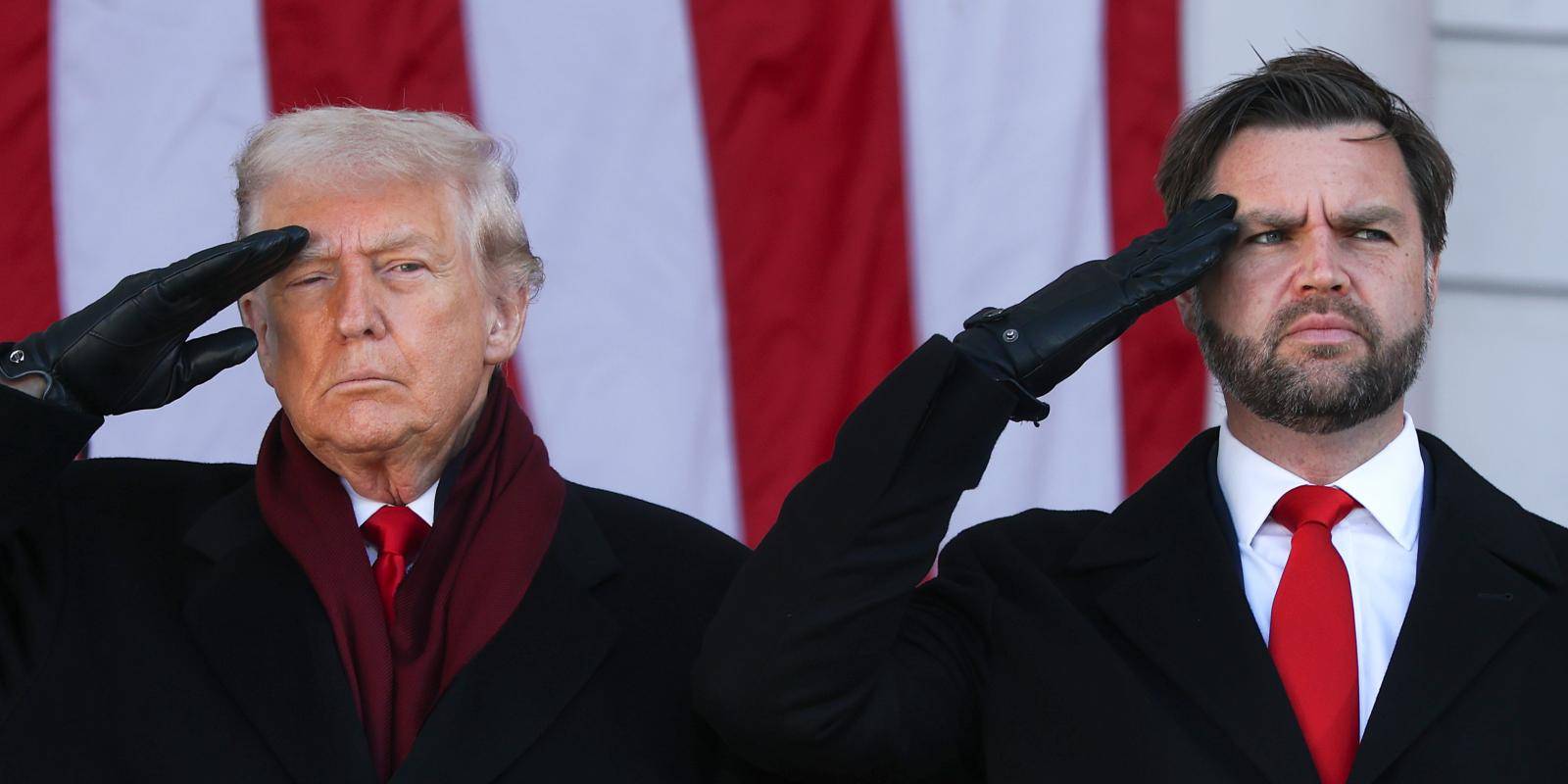
The strategy’s ‘great optimism’ for the rise of ‘patriotic European parties’ builds on the themes of Vice President JD Vance’s Munich Security Conference speech in February, saying the previously quiet part out loud:
The US will cultivate transatlantic ethno-nationalist movements. But it will not meddle elsewhere. It’s the most revealing and dramatic contradiction in the strategy, and it breaks with decades of US stated policy.
A sheriff in the West, none for the rest
US management of Latin America is now settled policy. Repurposing a 19th century arrangement, the ‘Trump Corollary’ to the Monroe Doctrine enlists and expands US ties with regional governments to control migration, drug trafficking, and secure critical supply chains.
These countries face a stark choice, they are told, between an ‘American-led world of sovereign countries and free economies’ or ‘a parallel one which they are influenced by countries on the other side of the world’. It’s an ambitious power move. If the strategy is resourced – a big if – US troops will pour into to the region, economic assistance will flow to compliant governments, and a much heavier US hand will rest on these leaders’ backs.
The US will no longer be Atlas, propping up the world: instead, it will ruthlessly prioritize. Yet, it will also seek peace deals everywhere.
But, the strategy informs other countries: don’t try this at home. The US will prevent ‘domination by any single competitor nation’ around the world. In Asia, the strategy rejects the ‘potential for any competitor to control the South China Sea’ given its global shipping importance. In Europe, the US can and must work with allies and partners to ‘prevent any adversarial power from dominating’ the continent.
In the Middle East, the US has an interest in ‘preventing an adversarial power from dominating the [region], its oil and gas supplies, and the chokepoints through which they pass’. Countering regional dominators is a popular strategy that can enrol US partners, and one past administrations have also pursued. But by seeking to dominate its own region, old charges of hypocrisy will dog US policy on the matter.
Global peacemaker in the periphery
The strategy states that the US will no longer be Atlas, propping up the world: instead, it will ruthlessly prioritize.
Yet, it will also seek peace deals everywhere. The document justifies Trump’s efforts to end conflicts in ‘peripheral’ regions because, even in countries beyond US ‘core interests’, deals can increase stability, strengthen influence, and open new markets.
If applied broadly, that would seem to contradict any effort at policy prioritization. Here, President Trump’s campaign for the Nobel Peace Prize is the core interest.
China as trade problem…and trade partner
The new strategy sees China more as a powerful economy, and less of a rival militarily. But is the US pursing economic decoupling from China or ‘a genuinely mutually advantageous economic relationship’?
The strategy condemns predatory state-directed subsidies, unfair trading practices, intellectual property theft, industrial espionage, and threats against US supply chains – and exports of fentanyl precursors.
These concerns take square aim at Beijing, yet the word China is only introduced two-thirds into the document. The administration rightfully aims to offer a vision for constructive trade relations as Trump’s state visit to Beijing approaches next year. But it remains conflicted on how it can hope to both ‘restore American economic independence’ and craft a trade relationship that benefits Washington and Beijing.
Hedgers of the world unite
Whether gleeful or glum this week, capitals are digesting the new strategy and convening to gut check their own approaches to the US. This text should only affirm the path countries have already charted: diversify your partnerships.
Hedging was, until recently, a way to reject the binary choice between the US and China and building negotiating leverage. Now, it also protects against volatility and unpredictability.
Europe began to hedge after Vance’s Munich speech, approving a €150 billion loan to develop its missile defence, cyber, and drone capabilities. Brazil has touted its diversified trade relationships away from the US to limit its dependence. Such activities – for Europe and beyond – are now more urgent.
The US strategy will not be implemented overnight. Due to shifting attention, its core elements many never be realized.
But it offers a definitive – if contradictory – roadmap to understand and navigate these next three years under Trump. Whether a reality or simply wishful thinking, the US is headed away from the Atlantic – off a cliff into a sea of commercial deals and easy living for the autocrats.