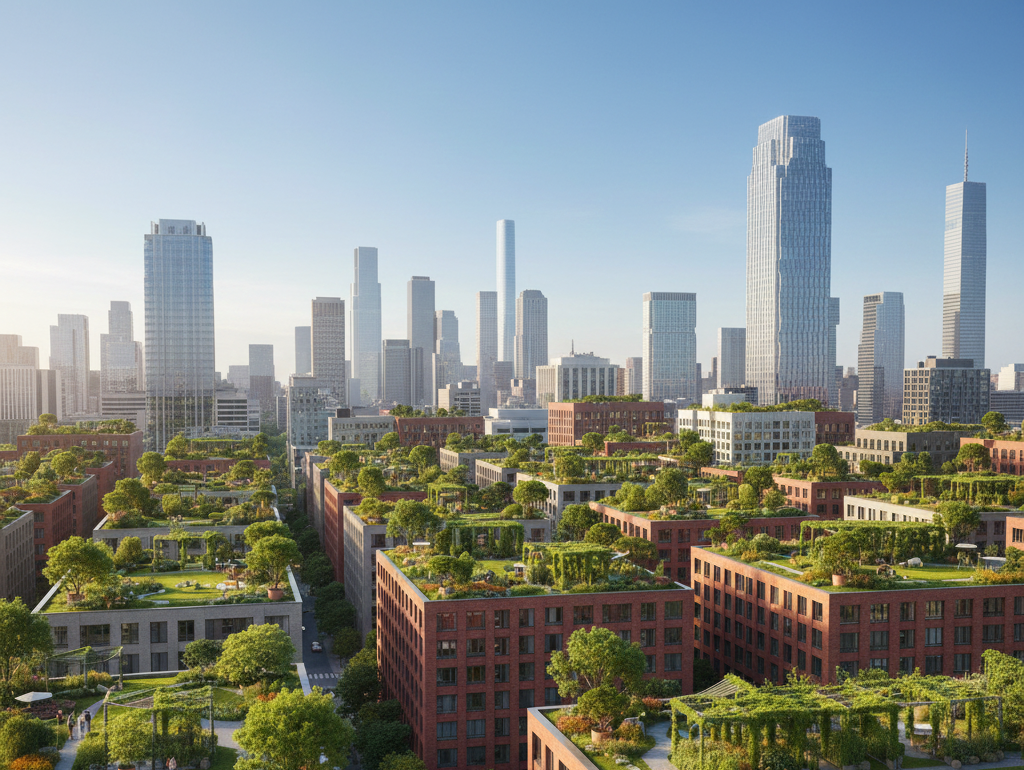
As global temperatures continue to rise and cities across the world face increasingly frequent heatwaves, urban planners are urgently seeking solutions that can cool cities, reduce pollution, and improve the quality of life for residents. One of the most promising strategies gaining momentum is the creation of rooftop gardens, and now, the city has officially announced a major initiative to introduce and promote rooftop gardens across residential, commercial, and public buildings. This move is being hailed as a crucial step toward combating extreme heat, improving air quality, and creating a more sustainable urban environment.
The decision to implement rooftop gardens was driven by the alarming rise in summer temperatures that have repeatedly crossed safe limits in recent years. Urban heat islands, a phenomenon where city surfaces absorb and trap heat, have made certain localities unbearably hot during the day and even throughout the night. Concrete buildings, asphalt roads, dense construction, limited trees, and rising pollution levels have all contributed to heat accumulation. After studying successful models from cities like Singapore, Toronto, and Tokyo, officials concluded that rooftop gardens could play a major role in reversing heat buildup, cooling neighborhoods, and making the city more climate-resilient.
Rooftop gardens, often referred to as green roofs, involve growing plants, shrubs, and even small trees on the rooftops of buildings. These gardens act as natural cooling systems by absorbing sunlight, providing insulation, and reducing heat radiation. Instead of roofs becoming heat-trapping surfaces, they transform into natural, living ecosystems. They also offer additional benefits such as air purification, rainwater absorption, noise reduction, and even food production in some cases. With the new initiative, the city hopes to create thousands of such green roofs in the coming years.
The city’s plan outlines a multi-stage approach to rolling out rooftop gardens. In the first stage, government buildings, public schools, hospitals, and community centers will receive rooftop gardens funded directly by the urban development department. This ensures that the concept is demonstrated on a large scale and sets an example for private property owners. In the second stage, incentives such as tax rebates, grants, and subsidies will be offered to residential and commercial building owners who adopt green roofs. There will also be collaboration with housing societies, apartment complexes, and private builders to integrate rooftop gardens into new real estate projects. The long-term vision is to gradually make rooftop gardens a standard requirement for future construction, much like rainwater harvesting systems.
One of the most compelling reasons for introducing rooftop gardens is their ability to reduce the urban heat island effect. Heatwaves have become more intense because cities lack sufficient green spaces to absorb heat. Traditional roofs absorb solar radiation throughout the day and release it slowly at night, keeping temperatures high. In contrast, green roofs absorb heat but release moisture into the air through a process called evapotranspiration, which cools the environment naturally. Studies from various global cities show that rooftop gardens can reduce roof temperatures by 20–40°C during peak summer, which directly lowers indoor temperatures as well. For residents, this translates into cooler living spaces, reduced air conditioning costs, and better comfort.
The environmental benefits of rooftop gardens extend beyond temperature reduction. Plants absorb carbon dioxide and release oxygen, playing a small but significant role in improving air quality. They also capture dust, pollutants, and particulate matter, helping to reduce smog levels in densely populated neighborhoods. Additionally, green roofs act as natural water absorbers, reducing rainwater runoff during storms and helping prevent urban flooding. They improve building insulation, making structures more energy-efficient by reducing the need for artificial cooling. In the long term, this lowers electricity consumption and reduces greenhouse gas emissions from power plants. Some rooftop gardens are even being designed to support local biodiversity by providing habitats for butterflies, birds, and pollinators.
City officials have expressed optimism about the initiative’s long-term impact. They believe rooftop gardens will not only cool the city but also transform its appearance and create more livable spaces. Officials have partnered with environmental groups, architects, botanists, and garden experts to design guidelines that ensure rooftop gardens are safe, sustainable, and suitable for local climate conditions. There are also plans to organize workshops and training sessions to teach residents how to maintain rooftop gardens on their own. This educational component is crucial because maintaining these gardens requires basic knowledge of watering, plant selection, drainage systems, and periodic upkeep.
Despite the enthusiasm surrounding the project, certain challenges need to be addressed. One major concern is the structural strength of buildings. Not all rooftops are designed to hold the additional weight of soil, plants, and irrigation systems. To address this, the city has introduced a mandatory structural assessment for buildings that wish to adopt rooftop gardens. Engineers will evaluate whether rooftops can safely accommodate the garden infrastructure and recommend modifications if necessary. Another challenge is maintenance, especially for busy or elderly residents who may not have the time or ability to care for the garden. To make the process easier, the city is considering creating a network of certified rooftop garden maintenance professionals who can offer affordable services.
Water usage is another factor that must be considered. Although plants require water to thrive, designers are encouraging the use of drought-resistant plants and lightweight soil mixes that retain moisture efficiently. Some rooftops may also be equipped with drip irrigation systems connected to rainwater harvesting tanks, ensuring sustainable water usage. With these strategies, officials believe that rooftop gardens can be maintained at reasonable cost and effort.
Economically, rooftop gardens are expected to create a new green industry within the city. Landscape architects, gardeners, plant suppliers, and green-roof construction companies will benefit from increased demand. Property owners may also experience long-term savings through reduced energy bills thanks to the cooling effect of rooftop gardens. Commercial buildings, in particular, may see a rise in property value as environmentally friendly features become more desirable to tenants and investors.
Beyond the ecological and economic benefits, rooftop gardens also offer social advantages. They create peaceful spaces where residents can relax, exercise, or spend time with family away from the noise and pollution of streets. Some communities may use rooftop gardens to grow vegetables and herbs, promoting urban farming and local food production. Rooftop gardens can serve as recreational spaces, meditation areas, children’s play zones, and community gathering spots. As more buildings adopt them, the city could develop an interconnected green rooftop network that brings communities closer and promotes healthier lifestyles.
Urban planners see rooftop gardens as more than just a cooling solution—they represent a major cultural shift toward greener, more sustainable living. Historically, cities have prioritized concrete expansion over ecological harmony, leading to problems such as heatwaves, flooding, and pollution. Rooftop gardens challenge this pattern by reintroducing nature into the built environment. This initiative encourages people to rethink how space is used and how nature can be integrated into everyday living. If successful, the project could inspire similar initiatives in other cities facing climate challenges.
The potential long-term benefits of rooftop gardens are significant. If thousands of buildings adopt green roofs, the cumulative cooling effect could help stabilize city temperatures and reduce the severity of future heatwaves. Energy consumption would drop substantially as more buildings rely on natural cooling. Air quality would improve, promoting better respiratory health among residents. Urban biodiversity would flourish as plants create habitats for insects and birds. The city’s overall resilience would improve, making it better prepared for extreme weather events caused by climate change.
In conclusion, the city’s initiative to introduce rooftop gardens as a strategy to combat heatwaves marks a bold and forward-looking approach to urban sustainability. It is a solution that addresses climate change, energy use, public health, and community well-being simultaneously. While challenges remain in terms of structural safety, maintenance, and water management, the long-term benefits far outweigh the obstacles. By turning rooftops into vibrant green ecosystems, the city is taking a major step toward creating a cooler, cleaner, and healthier environment for its residents. If implemented with commitment and cooperation, rooftop gardens could become a defining feature of the city’s identity and a model for other regions around the world striving to adapt to a warmer climate.